
 Image 1 of 1
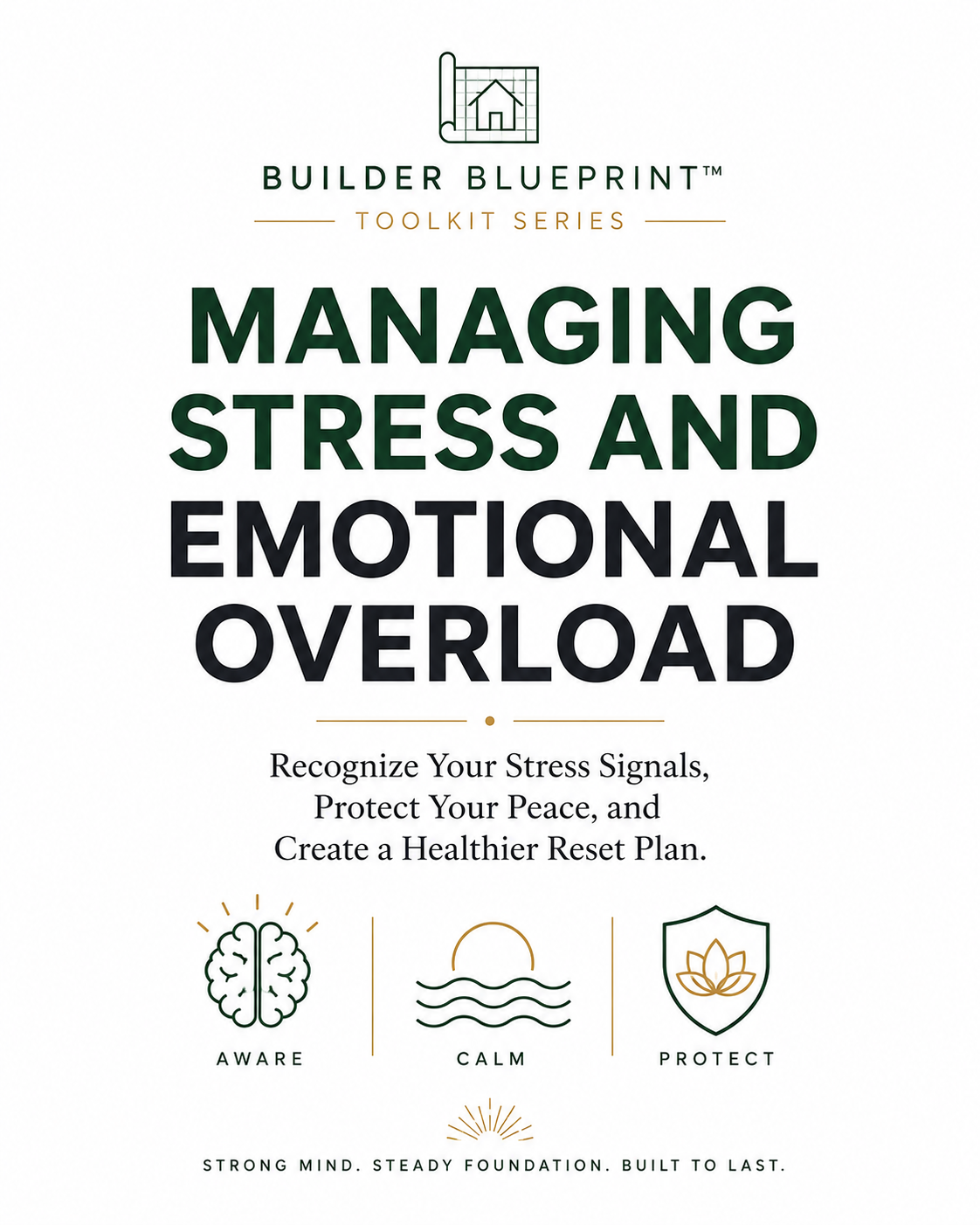
Recognize your stress signals, protect your peace, and build a practical personal reset plan.
This guided toolkit helps you understand emotional overload, identify what is draining you, and create healthier ways to respond before stress becomes overwhelming.
Stress can build quietly—until everything feels like too much.
The Managing Stress and Emotional Overload Wellness Blueprint Toolkit helps you slow down, recognize your personal warning signs, and create a realistic plan to protect your well-being.
Using the Builder Blueprint framework, you will:
Learn how stress and emotional overload can affect your thoughts, emotions, body, and behavior.
Reflect on your stressors, energy drains, coping habits, boundaries, and support needs.
Build a personal reset plan with practical calming strategies, boundaries, and next steps.
Continue learning with trusted wellness and mental-health resources.
What you will receive
Beginner-friendly stress and emotional-overload lesson
Guided reflection worksheet
Personal Reset Plan
Boundary and support prompts
Trusted wellness resource list
Printable and digitally usable format
This toolkit may be helpful for:
Young adults experiencing stress or emotional overwhelm
Students balancing school, work, and personal responsibilities
Professionals who feel mentally or emotionally drained
Anyone learning to recognize their stress signals
People who want healthier coping habits and clearer boundaries
Product details
Format: Digital PDF
Pages: 6
Paper size: A4
Estimated completion time: 60-75 minutes
Skill level: Beginner
Delivery: Instant digital download
Digital-product notice
Please note: This is a digital product. No physical item will be shipped. Not for individual re-sale. Due to the nature of downloadable products, all sales are final. This toolkit is for personal use only and may not be copied, shared, resold, distributed, or reproduced for commercial use.
Wellness disclaimer
This toolkit is provided for general educational and personal-development purposes only. It is not a substitute for therapy, medical care, diagnosis, or treatment from a qualified professional. Seek professional support when stress or emotional distress is persistent, severe, or interfering with daily life. In an immediate crisis, contact local emergency services or an appropriate crisis-support service in your area.
Recognize your stress signals, protect your peace, and build a practical personal reset plan.
This guided toolkit helps you understand emotional overload, identify what is draining you, and create healthier ways to respond before stress becomes overwhelming.
Stress can build quietly—until everything feels like too much.
The Managing Stress and Emotional Overload Wellness Blueprint Toolkit helps you slow down, recognize your personal warning signs, and create a realistic plan to protect your well-being.
Using the Builder Blueprint framework, you will:
Learn how stress and emotional overload can affect your thoughts, emotions, body, and behavior.
Reflect on your stressors, energy drains, coping habits, boundaries, and support needs.
Build a personal reset plan with practical calming strategies, boundaries, and next steps.
Continue learning with trusted wellness and mental-health resources.
What you will receive
Beginner-friendly stress and emotional-overload lesson
Guided reflection worksheet
Personal Reset Plan
Boundary and support prompts
Trusted wellness resource list
Printable and digitally usable format
This toolkit may be helpful for:
Young adults experiencing stress or emotional overwhelm
Students balancing school, work, and personal responsibilities
Professionals who feel mentally or emotionally drained
Anyone learning to recognize their stress signals
People who want healthier coping habits and clearer boundaries
Product details
Format: Digital PDF
Pages: 6
Paper size: A4
Estimated completion time: 60-75 minutes
Skill level: Beginner
Delivery: Instant digital download
Digital-product notice
Please note: This is a digital product. No physical item will be shipped. Not for individual re-sale. Due to the nature of downloadable products, all sales are final. This toolkit is for personal use only and may not be copied, shared, resold, distributed, or reproduced for commercial use.
Wellness disclaimer
This toolkit is provided for general educational and personal-development purposes only. It is not a substitute for therapy, medical care, diagnosis, or treatment from a qualified professional. Seek professional support when stress or emotional distress is persistent, severe, or interfering with daily life. In an immediate crisis, contact local emergency services or an appropriate crisis-support service in your area.